

Public awareness of AI is increasing every year. In a recent survey by the Pew Research Center on United States participants, 95% of respondents had heard about AI “at least a little.”
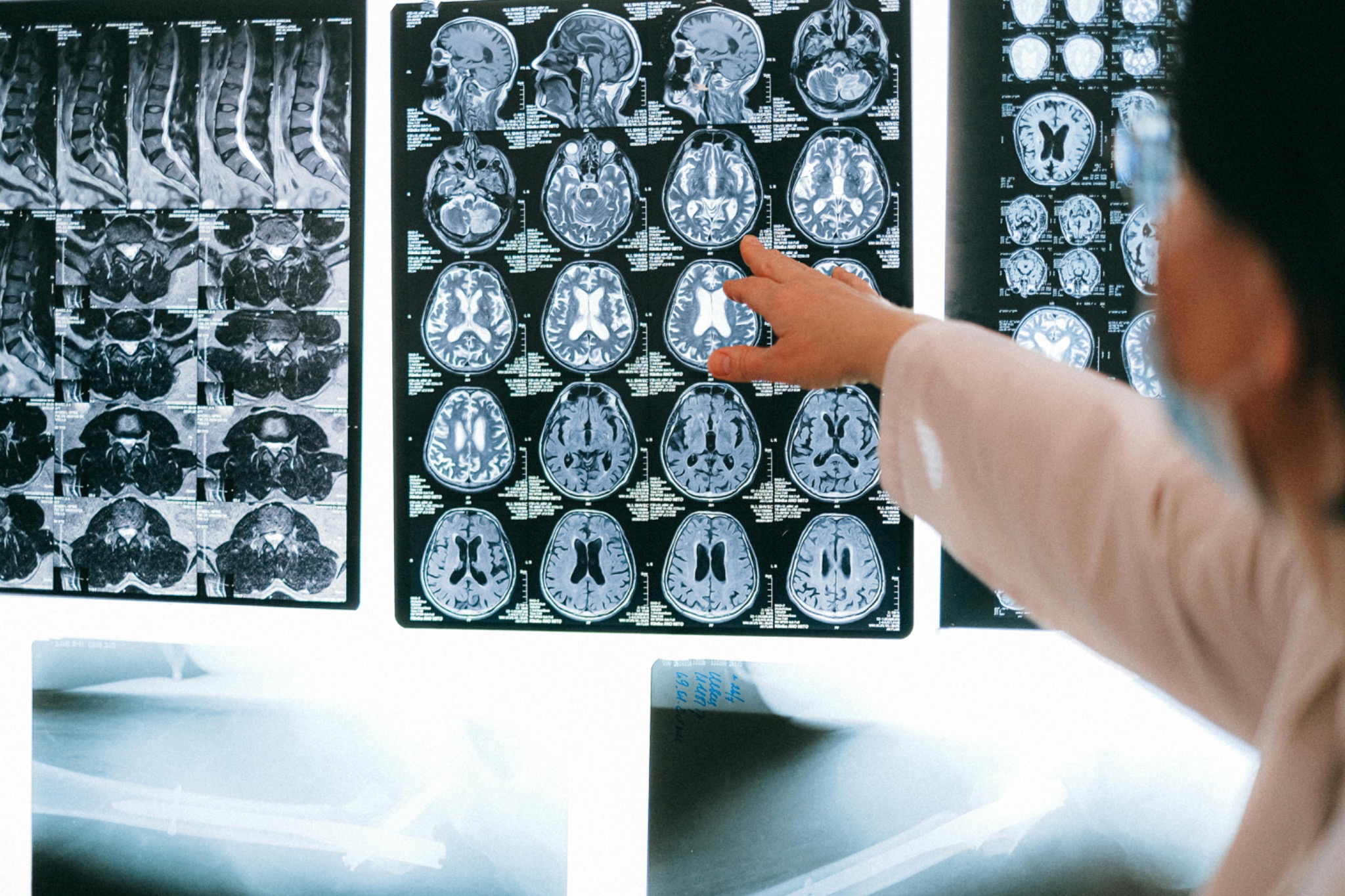
A medical professional points to brain scan images displayed on a light board. (Photo by Anna Shvets via Pexels)

The percentage of adults who say they have heard “a lot” about AI has risen from 26% in 2022, to 47% today.
Now AI is rapidly moving to support and diagnose neurodivergent individuals. In addition to clinical tools, general use AI chatbots and specific therapy models are already being used regularly by neurodivergent users. While experts and users have shared concerns about risks, research into long term effects is ongoing.
Clinical & Diagnostic Usage
A 2024 survey conducted by the American Medical Association showed that 66% of the physicians they surveyed used health care specific AI tools. Uses included charting, billing, documentation of visits, discharge and care plans, and more.
Wearable devices like Stanford’s “Autism Glass,” which are currently in development, read user facial expressions and provide social cues for the wearer. Another tool in development is currently looking to enter beta testing: Stanford’s ‘Noora’ chatbot, designed to be a social skills coach. Diagnostic options, such as Canvas Dx, are already in use. Canvas Dx, which received FDA approval in 2021, describes itself to clinicians as peer-reviewed, fast and accurate.
A 2025 study showed that Canvas Dx demonstrated high predictive accuracy, but was not able to make a determination for about one third of the cases. The study supports its use as a supplementary diagnostic tool rather than a replacement for other clinical evaluations.

Noora interface from Stanford University
While tools like Noora and Canvas are highly specified and subject to research, beta testing, and require FDA approval for clinical use, regular AI chatbots for general use are being used as well, without similar oversight.
AI Use Outside of Clinical Settings & Public Opinion
In a 2025 CBS segment, psychiatrist Dr. Marlynn Wei stated that general purpose AI is being used regularly for therapy and companionship. Wei stated the risks of using a general purpose AI include a lack of confidentiality, lack of clinical training in risk assessment, highlighting a lack of effective support especially for users in crisis from general AI chatbots.
Across social media, autistic and neurodivergent users have mixed opinions.
One user posted about their experience with AI, stating they have been described as rude and blunt for the way they speak, but they find AI helpful to fix the tone of their emails.
One commenter on an autism subreddit described AI’s as, “not thinking machines but basically just fancy auto-complete,” stating they were products of a “dehumanizing, profit-obsessed capitalist system.”
Despite public criticisms, 62% of U.S. adults reported using AI at least “several times a week,” according to Pew’s survey.
Ethical Concerns & Trends
According to research from Stanford University, when five popular therapy chatbots were prompted with various stimuli, gaps were detected in the models responses, such as stigmatized replies or missing opportunities to push back against suicidal ideation. In addition, there have been several incidents involving chat bot usage by autistic individuals that have increased discussion around risks.
A 30 year old autistic man is suing OpenAI, alleging that ChatGPT’s “endless affirmations” fed into his delusions regarding his discovery of a time bending theory. He states the chatbot encouraged his belief that he had discovered a way for people to move faster than light, resulting in his hospitalization. The lawsuit mentions the chatbots inability to recognize crisis.
“We have safeguards in place to help people, especially teens, when conversations turn sensitive,” OpenAI addressed the topic of litigation in a general statement. “This work is deeply important and ongoing as we engage mental health experts, clinicians and advocacy groups to help guide our continued improvements in these areas.”
Graphic by Kelsey Williams, data from Pew Research Center & published studies.
Growing research has led to both diagnostic and assistive technologies, however research into the long term effects of these tools is lacking. In the meantime, headlines around risks drive public discourse around AI’s role in our daily lives. The challenge researchers face is keeping up with adoption, before AI users outpace their own understanding of the tools supporting them.
More information about science updates regarding autism can be found on the National Institute of Health’s website.






Leave a Reply