
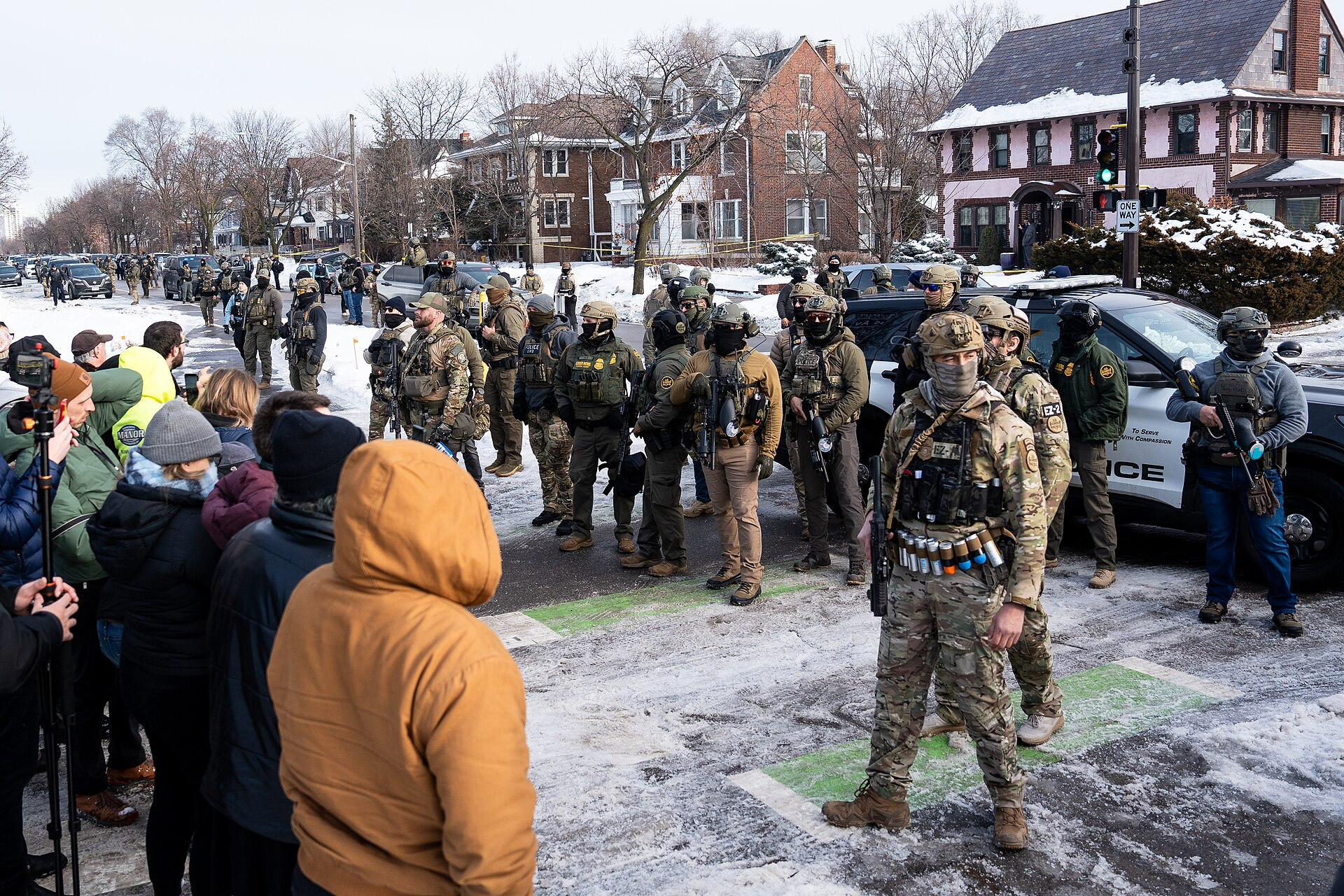
As immigration enforcement increases across the United States, images of arrests and detention flood social media. Debates over the identity concealment practices of U.S. Immigration and Customs Enforcement agents have intensified, with some states advocating for federal agents to visibly identify.

ICE agents stand near a vehicle in Minneapolis on Jan. 7, 2026. (Photo by Chad Davis via Wikimedia Commons)
To meet the demands of accountability and public trust, congress should require ICE agents to identify, and should limit masking to protective equipment and other special circumstances such as undercover operations.
Public concerns about government transparency are rising. According to a 2025 fact sheet from the Pew Research Center, public trust in government is 22% lower than last year, and has not exceeded 30% since 2007.
According to a bulletin released by the FBI, there is a risk of ICE agents being easily impersonated due to their masked uniforms. Risks of impersonation and a perceived lack of accountability can lead to federal officers losing credibility in the areas they operate in.
A recent incident demonstrates how masks can negatively influence an encounter. In a CNN interview, Aliya Rahman said she was pulled out of her vehicle by ICE agents after unknowingly driving into a protest area. Rahman, who is autistic, said she received conflicting commands that were hard to understand, as she relies on facial movements when experiencing auditory processing issues. While attempting to get medical care in detention, she said that local staff were reluctant to “step on ICE’s toes.” Rahman’s experience highlights how concealed identities can heighten volatile enforcement situations, particularly when disabilities are involved.
Doxxing and harassment risks are valid reasons ICE agents may feel the need to conceal their identities. However, masking does not always protect officers from harassment, as seen with the “No Sleep for Ice” events, where protesters gather outside of hotels, attempting to deprive the ICE agents inside of any sleep.
Organizers acknowledged using “multiple sources of information” to be confident before targeting a hotel believed to have ICE officers inside. Additionally, volunteers have posted information about the identities of ICE agents online, targeting “mostly masked ICE officers,” as stated by professor Tim Zack in an interview with CNN.
Legal tensions on this issue can be seen between the state and federal legislatures. The state of California was first to pass anti-masking legislation for ICE agents. The law, which bans masks for federal agents operating in California, was signed by Governor Gavin Newsom in September of last year.
Earlier this month however, federal Judge Christina A. Snyder ruled to block SB-627 from going into effect. While Snyder blocked the anti-mask law, the judge allowed another California law to stand in the same ruling. With state level laws like SB-627 facing criticism and pushback, there remains an opportunity for federal regulations.
Immigration enforcement is a federal responsibility. From protecting civilians, to protecting the agents themselves, this issue requires comprehensive legislation at a federal level to give state and local governments a clear path forward. We need congress to act by providing clear and consistent guidelines for the identification of federal immigration officers.







Leave a Reply